Fake Jail Calls: How the Jail Call Scam Works and How to Stop It
A fake jail call is a scam where someone says your loved one has been arrested and needs bail money right now, then pushes you to pay by payment app, wire transfer, gift card, or cryptocurrency. Before you send a dollar, hang up and check for yourself. Look him up on the official jail search, call the jail at its official number, and check any bondsman’s license with the Alabama Professional Bail Bonding Board.
Need a real, licensed bondsman? Call Bail Bonds of Alabama today: 205-401-8052, 24 hours a day. Ask us to video call you before you pay, and we will.
Key takeaways
- Scammers pretend to be your loved one, a bondsman, a lawyer, or a police officer, and they rush you.
- The Federal Trade Commission says these scammers ask for payment by wire transfer, cryptocurrency, payment app, or gift card.
- In our experience, a scam call can come before the arrest shows up on any online jail search.
- Check the jail yourself, with its official phone number, before you pay anyone.
- Look up a bondsman’s license on the state’s Licensee Search, and ask for a video call before you pay.
What is a fake jail call?
A fake jail call is a version of what the Federal Trade Commission calls a family emergency scam. The caller says someone you love is in trouble, often in jail, and that you are the only one who can help. They say it is urgent. They may ask you to keep it a secret.
The call can sound real. The FTC warns that scammers use artificial intelligence to copy a family member’s voice from a short audio clip, like a video posted online. So a voice that sounds exactly like your son or grandson is not proof the call is real.
People search for this scam many different ways: fake jail call, jail call scam, prison call scam, inmate call scam, bail scam, or bond scam. It is the same trick.
How does the jail call scam work?
Most fake jail calls follow the same pattern:
- The call. Someone says your loved one was arrested, was in a car wreck, or is being held until bail is paid.
- An “official” takes over. According to the FTC, the scammer may pose as a lawyer, a police officer, or someone else in authority to sound convincing. On a jail call, that often means a fake bondsman.
- The pressure. You are told to pay right now, or he will stay in jail. You may be told not to call anyone else.
- The payment. The caller asks for a payment app, a wire transfer, a gift card, or cryptocurrency, because that money is hard to get back.
- More demands. Once you pay, there may be a second call for “court fees” or a higher bail amount.
In our experience, some of these calls reach families before the arrest even appears on an online jail search. That timing is what makes the call feel real. Many families have never been through an arrest before, and they do not know how bail actually works.
What is the grandparent scam?
The grandparent scam is the same scheme aimed at grandparents. The FTC describes it in its grandkid scams guide: a call that sounds like a grandchild, saying “Grandma, I need money for bail,” asking you to act fast and keep it secret. A second caller posing as a lawyer or officer may join to make it believable.
If you are a grandparent and get this call, you do not have to decide on the phone. Hang up and call your grandchild, or his parents, on a number you already have.
What are the warning signs of a fake jail call?
- You are rushed. The caller says you must pay in the next few minutes.
- You are told to keep it secret. Real families call each other when someone is arrested.
- You are asked to pay in a hard-to-trace way: a payment app, a wire transfer, a gift card, or cryptocurrency.
- The caller will not give a full name, a company name, or a license.
- The caller will not video call you.
- You cannot find him on any official jail search yet.
- The voice sounds right, but the details are vague. Remember that voices can be copied.
How do you check if a jail call is real?
Take these steps before you send any money:
- Hang up. Do not call back the number the caller gives you.
- Call your loved one or another family member on a number you already have. The FTC recommends doing this even if the caller told you to keep it secret.
- Search the official jail. Use our guides for the Jefferson County Jail, the Shelby County Jail, and the St. Clair County Jail, which link to each official search.
- Call the jail at its official number, listed in those guides, and ask whether he is there.
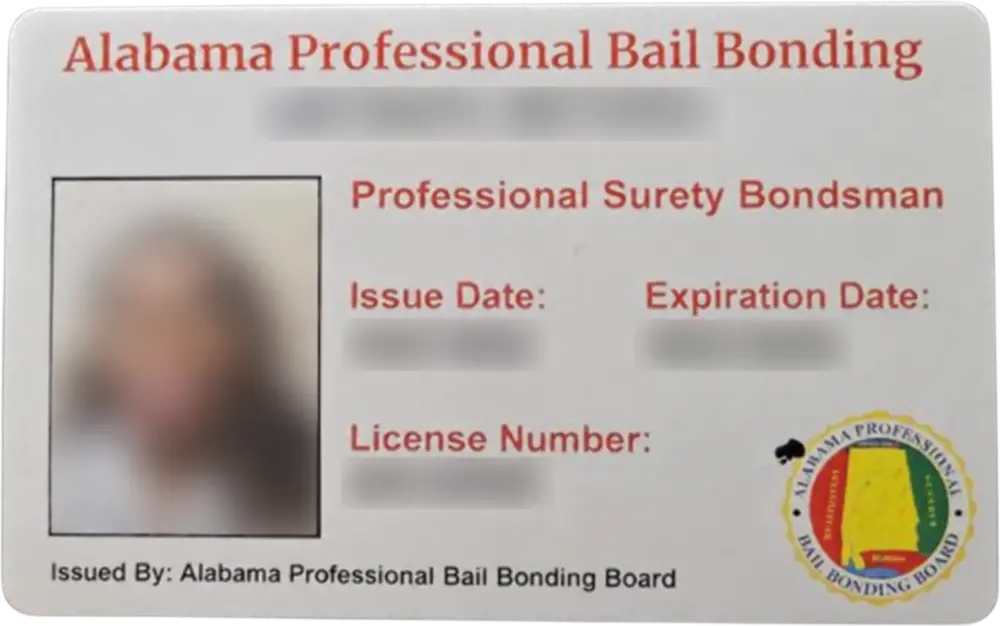
- Check the bondsman’s license. The Alabama Professional Bail Bonding Board runs a public Licensee Search. If you cannot find the person or the company, do not pay.
- Ask for a video call before you pay. A real bondsman can show you who you are dealing with. At Bail Bonds of Alabama, ask us to video call you before you pay, and we will.
- Do not send money to anyone you have not checked.
How do you pay a real bail bondsman safely?
A real bail bond follows a clear process. You work with a licensed company, you sign a written agreement, and you get a receipt.
- Know the normal fee. A bail bond fee is normally 10% to 15% of the bail amount. A price far outside that range is a reason to slow down.
- Read what you sign. As the co-signer, you are promising to cover the company’s loss if he misses court. Read what an indemnitor is before you sign anything.
- Give true, accurate information, and update it if it changes. Giving false information on your bail paperwork is a crime in Alabama. When property is used for a bond, the affidavit required by Ala. Code § 15-13-152 warns every signer that false information could lead to a criminal charge.
- Pay the company, not a stranger. At Bail Bonds of Alabama, you can pay by debit card, credit card, or an online payment authorization form, and creative financing is available, upon approval.
What should you do if you already sent money?
Act fast. Every hour counts when money is moving.
- Call the bank, card company, payment app, or wire service you used, tell them it was a scam, and ask them to stop or reverse the payment.
- Report it to the FTC at ReportFraud.ftc.gov.
- Report it to the Alabama Attorney General through the consumer complaint form.
- If someone pretended to be a bondsman, tell the Alabama Professional Bail Bonding Board. Its complaint form is on its licensing page, and the board’s phone number is 334-578-8315.
- Call your local police and give them the phone number that called you.
Then check on your loved one the safe way, through the official jail search.
Frequently asked questions
What is a fake jail call?
A fake jail call is a scam where someone claims your loved one is in jail and needs bail money right away, then asks you to pay by payment app, wire transfer, gift card, or cryptocurrency.
How do I know if a bail bondsman is real?
Look up the bondsman or the company on the Alabama Professional Bail Bonding Board’s Licensee Search, and ask for a video call before you pay. If you cannot verify them, do not send money.
Can a scam call come before the arrest shows up online?
Yes. In our experience, some scam calls reach families before the arrest appears on an online jail search. Call the jail at its official number to check.
Is the grandparent scam the same as a fake jail call?
Often, yes. The grandparent scam is a fake emergency call aimed at grandparents, and the story is frequently that the grandchild is in jail and needs bail.
Where do I report a jail call scam in Alabama?
Report it to the FTC at ReportFraud.ftc.gov and to the Alabama Attorney General’s consumer complaint form. If the caller pretended to be a bondsman, tell the Alabama Professional Bail Bonding Board.
Where to go next
- Bail bonds in Jefferson, Shelby, and St. Clair Counties: 24/7 emergency bail bond service
- Jefferson County Jail inmate search
- What is an indemnitor? What you sign as a bail co-signer
- How do bail bonds work in Alabama?
- Co-Signers, Costs & Financing: every guide for the person paying
Bail Bonds of Alabama has served Jefferson, Shelby, and St. Clair Counties since 2014. One call. That’s all. Call today: 205-401-8052, 24 hours a day.
This page is general information about phone scams involving jails and bail, based on Federal Trade Commission and Alabama Professional Bail Bonding Board guidance as of September 2026 and our own experience. It is not legal advice.